
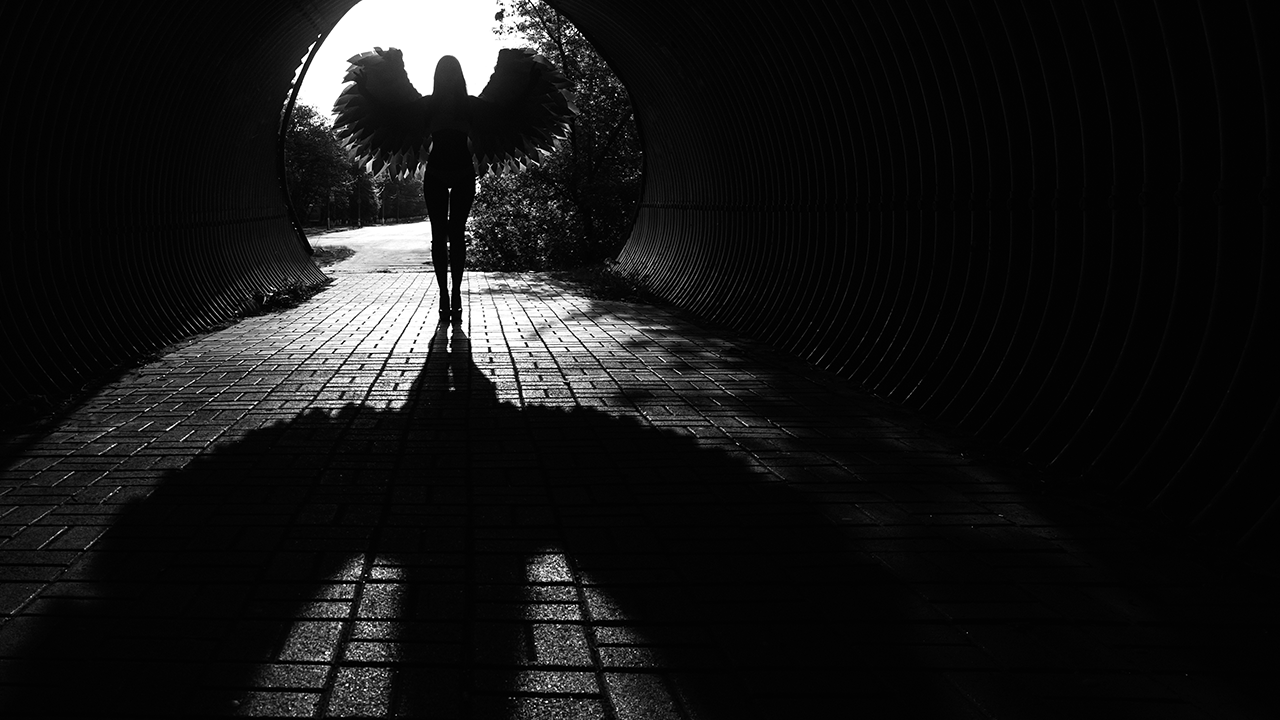
Vertebrae by Paul Edmonds
Thomas dreamed of the crash in fragments. Crunching glass. The taste of metal. Someone—something—screaming.
He woke up in the hospital, and his first thought was, How fucking cliche. He was braced at the neck, his back bandaged. Spine welded like busted coaster track.
A tragic character in some straight-to-streaming hack-flick.
He had to laugh. It hurt.
“I’m sorry?” the surgeon asked, looking concerned.
“Nothing. I’m sorry, go on.”
“We fused L2 through T9,” she said, making a quick sketch on her notepad. “You’re lucky. Another inch—”
Thomas didn’t feel lucky.
Pain, sure.
Anger, yes. At himself, for oversleeping, taking that shortcut. At the teenager who’d been texting when their cars went kablam! Because he knew things would be different. After the docs cut him loose.
Would he still bowl? Roughhouse with his nephews? Satisfy a woman?
But mostly he felt… lighter. As though something other than bone and blood had left his body. Something fundamental scraped and tossed out along with all the soaked gauze.
There was a long way to go. Pills, nurses, scratchy bedsheets. He could lie there and think about it.
He had time.
#
The first days were a parade of visitors.
Co-workers stopped by after their shifts, bearing hotrod mags and dollar-store greeting cards. Thomas reveled in the smells they brought: varnish and sawdust. He wondered if he’d ever be back with them on a job, drinking coffee, cracking dick jokes.
His ex-wife Karen made an appearance. Thomas thought maybe he’d died on the table, had been waiting around in Hell’s lobby. But she looked guilt-stricken, miserable. As if his condition was the inevitable result of their breakup. He could tell she was suffering. It was the highlight of his day.
He most looked forward to visits with his sister Marla. Her two boys, Mitchell and Andy. They played puzzle games and watched movies on Marla’s iPad. Once, after a fit of begging, Thomas showed them the incision running down his back. Marla recoiled, but the boys raved about its coolness, how badass it would look once healed.
They became fixtures in his sick room. His solace, what got him through the pain and prodding, the endless cups of Jell-O and trays of mystery meat.
Then.
Then, something happened.
Mitchell had been swiveling on the small stool kept for when the white coats stopped by. The boy tipped a mug of lukewarm broth into Thomas’s lap.
Thomas regarded the spill, smiled, and lashed out at the boy with a quick, hard slap.
Mitchell tumbled from the stool, landed on his cheek. His cries rattled the bedframe. Marla peeled Mitchell off the linoleum, cradled him. Looked at Thomas like he was rabid. Andy broke into his own bout of sobbing. Marla took her sons and left without a word, their wails trailing down the hall.
Thomas’s eyes moved from the door to his still-outstretched hand. He studied it, turned it over. It looked alien, an object without context.
He rewound the moment. The anger had already subsided, leaving only that lightened feeling, the one that had prowled along the outskirts of his senses during the first days of his convalescence. It was frightening, the intensity with which the fury had arrived, the expediency of its retreat. It made no sense.
Still.
His recovery had been slow. Suffocating with its attendant humiliations. Sponge baths and piss jugs. Fluffy socks with rubber treads. The pitying eyes of loved ones. Who wouldn’t lose it?
But Mitchell? He loved the boy. Had never laid a finger on him. On anyone for that matter. Not even a schoolyard spat. He and Marla had grown up under the looming threat of their father’s leather belt, and eighteen years of that had been enough for both to approach Mitchell and Andy with a gentleness that was borderline indulgent.
He called Marla’s cell and got her voicemail. He recorded a long, rambling message, deleted it, tried again. Eventually, he gave up. Decided to let the incident settle.
And strangely, by dinner, the matter had retreated to the background. A ghost of a ghost.
By lights out, he had forgotten it completely.
#
He felt worse as days became weeks. Not physically. He was improving on that front. But something inside him ached, felt raw. It was his family, yes (they hadn’t returned; he hadn’t reached out), but something beyond that. A change in his attitude. A sharpening, like someone had taken a butter knife to a whetstone, grinding until the metal gleamed.
It manifested in subtle—and not so subtle—ways. He glared at the nurses. Cast PornHub to the room’s flatscreen. One afternoon, he binged his supper then promptly puked it up, laughed while an orderly worked her mop.
His final night in the hospital, he woke up with tears on his face. He wiped them away with the back of his hand—the hand that’d struck Mitchell. The one that was now so often clenched.
Not sorrow. Relief.
#
He was changing. In the weeks after returning home. His family saw it, his friends. The physical therapist who would run him through his tortures. His attitude had spoiled, like meat tossed behind a radiator.
He liked it.
His work pals stopped visiting. The PT service said his therapist had quit, that Thomas was on his own.
Marla made calls. He dodged them. She left messages and sent texts. He deleted them. One day, she showed up with sandwiches in a paper bag. He watched her through the curtains. For a moment, he felt himself again, full of shame for what he’d done to Mitchell, to all of them. He almost opened the door before his blood boiled and resentment bolted through him. He stepped away from the curtains, cursing, and collapsed on the couch.
He didn’t hire another therapist. He skipped his follow-ups.
But he wasn’t lonely, never bored. His brain had begun making movies. Waking visions. Abstract scenes. There was a figure—perhaps a large bird—with bent, crushed wings. It lay between two slabs, slabs that were slowly inching together, urged on by some cruel, unseen hand. It made him recall old woodcut images of witches and heretics, crushed beneath boards.
He began to see the figure more often.
Inspired, he ventured outside with his entourage of cane and shamble and spite. He felt compelled to provoke. To ruin.
He brought baristas to tears. Harassed women with X-rated pantomimes. He stole from donation jars, set a mailbox on fire. A limping phantom appeared on Ring cams around town, smashing windows with his stick.
And rather than feeling scared, or even concerned, he felt liberated. As if some part of him had been holding back.
He started to feel better.
#
His imaginings drew into focus. Pictures sharp enough to cut rock. The figure—not a bird but a man. Roped with the exaggerated muscle of a comic book hero. Wings folded, bleeding where quills anchored to glistening skin. The boards that sandwiched him were not stone or wood, but bone. Hunks of bone wrapped in fat and blood vessels and flared pink tissue.
The man never cried, never screamed. He endured silently as life oozed from his body.
And Thomas—with a sardonic snort—understood it was him. The better part. Trapped by the surgeon’s pins and rods, like a fly caught in the jaws of a carnivorous plant. Wrong place at the wrong time, fate sealed when the airbags deployed, and his vision went full dark.
He felt vibrations in his spine. Suffering. Pleading.
And sometimes, he flexed his shoulders.
Just to feel it again.
#
The first person he hurt was a man on a bicycle.
The bicyclist wore a teardrop helmet. Spandex outfit with sponsorship logos. Thomas found him offensive in contrast to his own hobbled state. He waited for the man at the edge of the sidewalk, and when he was close, struck with his cane.
He caught the man just below the temple. The guy flew back. The bike kept going into a parked Camry.
The bicyclist’s right arm took the fall. Something cracked.
Thomas stood over him, gripping his cane tighter. He had only raised it an inch or two before the first samaritan stepped in, knelt beside the bicyclist. She helped remove his helmet. Soon more arrived. Someone called 911.
No one had seen what happened.
Thomas sneered, walked away before the man could pull himself together enough to start talking.
That night, he slept well. In his dreams, the distant snap of an arm. Again and again. A symphony of bones.
Or maybe feathers.
#
More incidents around town.
A grandma nudged on an escalator. White hair in the treads, nearly scalped.
Box nails driven through park swings. Broken glass in sandboxes.
Chaos at a dog shelter, fireworks dropped down an open skylight.
And something else growing around Thomas. A shadowy ecosystem, its viral winds spreading, infecting.
Fights broke out around him. Horns blared, traffic halted. Mothers beat children for imaginary infractions.
He kept the lights off. Preferred the dark. And all the while, that internal pulsing. Persistent but weakening. He savored it, and sometimes he’d lie on the hardwood floor and arch upward, painfully, onto his scar. The vibrations would intensify, just for a moment. An appeal for help. Or someone trying to stretch cramped wings.
In his last vision, the man had nearly disappeared. Disintegrated. Muscles atrophied. Wings in two small piles like pinches of chalk dust.
A single eye blinked weakly.
With that, the vibrations were gone.
Gone too: guilt. Doubt. The soft, shameful voice of conscience.
Overthrown by something else.
Colder.
Hungrier.
Whatever it was, it fit.