
ONE summer evening, two or three years ago, a group of passengers were sitting on the after-deck of the steamer City of Alpena, of the Detroit and Mackinac line, upward bound.
Most of them were strangers to each other, but, as fellow-passengers, they had been brought into social contact for the time, and the conversation was general.
There had been some talk on the subject of acquaintances formed in this way; and of men who, living in places far apart, and following widely different avocations, were brought together by the controlling force of circumstances, and for a few days traveled the same path.
Thence the conversation had drifted to employments and pursuits in general, and the causes which determined their choice; the consensus of opinion being that what seemed chance was really more potent than any deliberate process of choice.
“You can prove that by me, gentlemen,” said a man who was sitting with his chair tilted back against the rail.
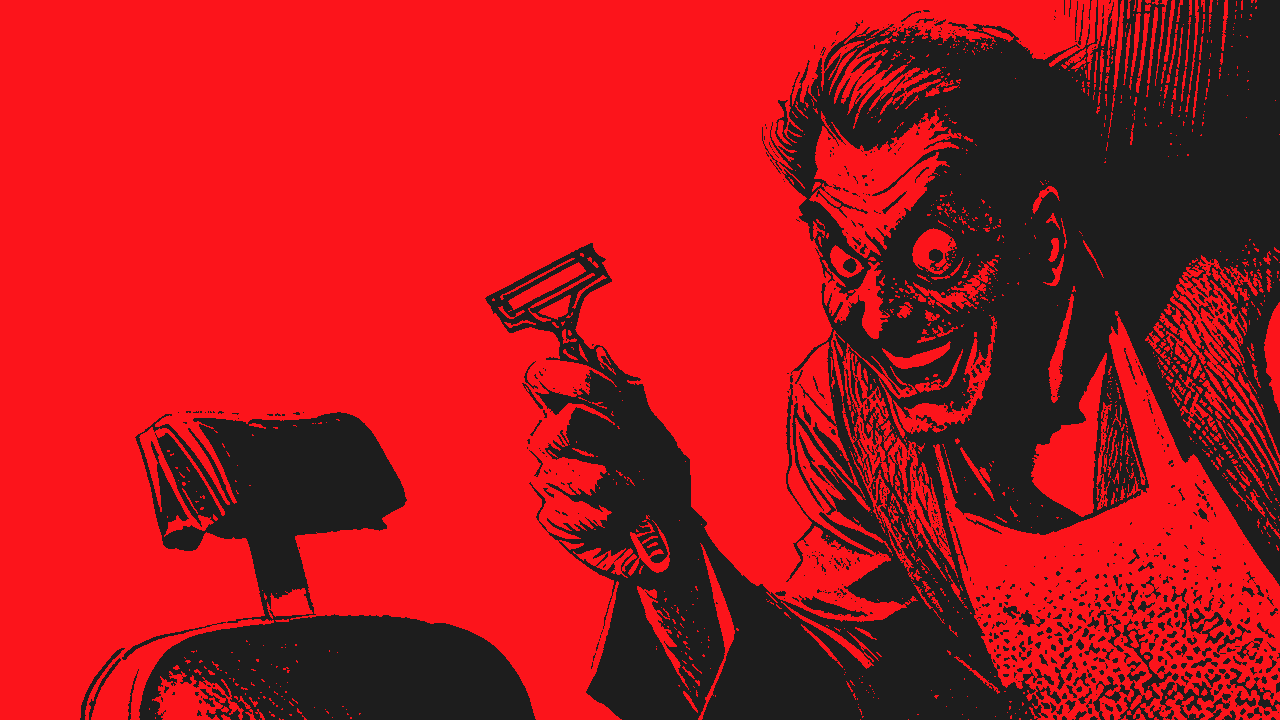
I had frequently noticed this man about the boat during the trip. He was a glib, voluble fellow, and was selling a patent chair of his own invention, which he called the “Mechanico-Artistic Wonder.” It was a curious, complicated affair, suited to the uses of barbers, dentists, surgeons, and invalids; it was adjusted by means of a system of joints, levers, arms, cogs, and what not, and was specially adapted to the purpose of permitting the occupant to assume, or be placed in, any possible position or posture of which the human body is susceptible; and, if desired, as in the case of an insane patient, of holding him fast when so placed.
But what attracted special attention to the man was not his invention, but his face. Ordinarily, and when in repose, there was nothing out of the common about it; but the moment that he became keenly interested or excited, his features underwent a startling change.
At such times, his nose, which was a pronounced aquiline, seemed actually to push itself forward from his face, drawing the skin so tightly that the bridge seemed breaking through it, showing a narrow white strip down the middle; while the upper lip was drawn up at the angles of the mouth, exposing about a quarter of an inch of the sharp, white points of his canine teeth. This odd protrusion of the bridge of his nose also tightened and drew forward the skin under his eyes,—which were set very close together,—bringing down the outer corners, and giving those organs the appearance of two moons in the quarter.
All the characteristics of his bizarre features were in full play as he told his story.
“I used to be a barber. It was my chosen profession from my childhood. I think it was reading about the barber in the ‘Arabian Nights’, when I was a kid, that fixed my choice. Anyway, I always thought, and still think, that there is no business in the world so desirable all round as that.
“I learned my trade—or art, as I call it—in the city of New York, and worked in a big shop there for ten years, saving most of my wages. About five years ago I came West and started a bang-up shop for myself in a small city, the name of which I won’t mention. I am a top-notch artist, and kept good assistants, and for three years everything went well, and I made money. I had considerable education when a boy, and a taste for reading, which I always kept up. My place was first class, and first-class men patronized me, and I had personal friends and intimates among the best and most intelligent people. There was a medical college in the city, and among my friends were some of the students and faculty. One day, by invitation, I accompanied a party of the students to one of their lectures, or clinics, or whatever they call them. It was in a great barn of a room at the top of the building, with no windows but skylights. They had a dead man there, lying on his back on a table in the middle of the room, and were dissecting his face. The professor did most of the work and talking. He would cut away at it awhile, and then explain the thing to the students. Occasionally one of the boys would take a hand at the carving, under the direction of the professor. All this time the dead man’s eyes were wide open, staring at them, as piece by piece they peeled the skin and flesh from his bones! It was a horrible sight to me, and made me sick at the stomach besides, but they didn’t appear to mind it a bit, but went on cutting away at that dead face, as cool and deliberate as I would go about shaving a man, all the while talking, laughing, and joking each other, as unconcerned as you please.
“I tell you it made me sick clear through; and after the longest two hours I ever spent, I was glad to have the lecture over with, and get out into God’s free air again. I must have looked white around the gills, for the boys joked me unmercifully; told me to come again, and come often, and I would like it after a while. The professor, with a wink to the boys, said he thought I was intended by nature for a surgeon, and advised me to exchange the razor for the scalpel. He also offered to show me the ‘pickling vat.’ I declined the invitation and went home; but the affair had so upset my stomach and nerves that I was hardly fit for work for several days.
“And then began a queer state of things. Every time a customer got into my chair, with head thrown back and face upturned, it reminded me of that dead man’s face, and as I stood over it with my razor, the thought would come, ‘What if I was a surgeon and was going to dissect this countenance?’ And then I would find myself thinking, ‘Suppose I do?’ and an impulse to do it in reality began to take hold of me, faint at first, but growing stronger every day. And this infernal idea stuck, and I could not drive it away. We hear of people who, standing by a well or a precipice, sometimes feel a strange impulse to jump down. At last I got a good deal in the same way. The inclination to cut and carve the faces of my customers became so strong that I felt I was fast losing control of myself. It would make the hearts of a good many prominent citizens of that town stop beating now, could they know how narrowly they sometimes escaped having their throats cut when under my hands.
“I have had the strength all go out of me, and leave me with beads of sweat standing on my forehead, and my hands all of a tremble, from the struggle I made to resist the cursed temptation. I realized what the end of it was sure to be some day, and might be any day, so I quit business for a time, took a trip for my health, and got medicine from the doctors for nervous derangement. I didn’t tell them what shape my nervous fits took, though.
“Away from the shop I got better, and after a few weeks thought I was over it, and went back to work. But it was no use, the first face that looked up at me from the chair was to me that dead man’s face. It happened that this first customer was the professor who advised me to exchange my razor for a scalpel. I forced myself through the job in some way, so awkwardly, though, that he spoke of his former advice, and remarked that if I couldn’t handle the scalpel any better than I was then using my razor, I had better give up both and take to a shoe brush. If he had known how mighty near I came to using my razor as a scalpel on that occasion, he would sooner have been in the bottom of his pickling vat than in my chair.
“That was the last time I attempted to practise my art. I quit the business, went to work on some ideas that had been forming in my mind for several years, and invented the Mechanico-Artistic Wonder, my incomparable chair, and have since been introducing it to an appreciative public. I am all right now, am in good health and spirits, and don’t think I have any murderous impulses lurking in my system; but it is not likely I shall ever return to my old trade. I like it better than anything else, and at times I feel a strong inclination to try it again; but the risk is too great. The chair business is fairly good, and growing better, and it suits me well enough, though it is not in it with the tonsorial line.”
As he finished his story, the ex-barber arose from his seat, yawned, stretched himself, and looked around upon the company. The excitement of his narrative had brought into full play all the peculiarities of his eccentric features. His moon eyes were like crescents in his forehead, the bridge of his nose was thrust away forward, the white streak down the middle of it gleamed like a narrow band of silver, and the points of his sharp teeth looked like pendants of ivory hanging from the corners of his mouth.
As it was growing late, the company soon separated, and, one after another, sought their berths. I know not how it was with others, but the barber’s story, with the horrible possibilities suggested by it, haunted me all night.
At daylight the next morning, we touched at Cheboygan, where my partner and I, with our guns, fishing tackle, and camping outfit, went ashore, leaving the big steamer with most of her passengers, including the ex-barber, to proceed on her trip.
A month passed, a month of life in the woods; and with brown, bearded faces, shaggy hair, and wolfish appetites, we were again in Cheboygan, on our way homeward.
Of course the first thing we looked out for was a shave, and we entered the first shop we came to. There was but one operator, and my partner proposed that I take the first turn, while he went down to the dock and looked after some of our stuff; it would take but a few minutes, he said, and he would be back by the time I was finished.
The shop was on the main street, and the chair in which I seated myself was near the window. In the excitement and enjoyment of the past few weeks, the impression which had been produced upon my mind by the story of the barber on the steamer had lost its vividness, and now I seldom thought of it.
I know the gruesome subject was not in my mind as I took my seat, laid back my head, and suffered myself to be enveloped to the chin in the customary white apron.
But as the operator bent over me, tucking in the edges of the cloth around my neck, it came to me quick and sharp as a flash of lightning. Just then he gave the back of the chair a tilt, stepped in front of me, and took a general survey of his preparations.
Oh, horrible! Is it?—no, impossible! My God, yes! It is the barber of the Alpena!
As his eyes met mine, they lit up with a devilish gleam, the big nose began to bulge forward, throwing into sharp relief the sinister white streak; the tightening skin drew down and inward the corners of his eyes, and his lip jerked upward, revealing the points of his wolfish tusks.
With a cry of terror, a cry that had no manhood in it, a cry that was the howl of a tortured beast, I put forth my strength and tried to spring to my feet. Vain effort! Head, hand, and foot, I was held fast in the complicated machinery of the Mechanico-Artistic Wonder!
With every muscle strained to the utmost tension, I struggled, as a man might struggle in the lethal coil of a python,—and to as little purpose. It was as if I had been caught in the hardening rock of the earth’s foundation, and there lay fast locked, immovable forever.
When, finally, utterly exhausted, I ceased my struggles, the fearful being, who, with arms folded, had been standing perfectly still, regarding me with a half smile of mingled curiosity and amusement, nodded his head approvingly, and turned to a small table covered with the tools and apparatus of his trade.
And then followed a scene of inconceivable horror.
Carefully selecting a razor from among several lying on the table, he gave it a few rapid strokes across his strap, and then closely examined its edge with eye and finger. Apparently satisfied with its condition, he slapped it briskly on the palm of his hand, approaching me as he did so.
In the agony of that awful moment, I again struggled to free myself, and sent forth cries that seemed to me should alarm every inhabitant of the town, and reach the ears of the people on the boats far out in the lake. To all this, the human hyena, in whose power I was, gave no heed whatever. He seemed neither to hear my cries nor see my struggles. He appeared absorbed in his dreadful purpose, and, coming close beside me, deliberately and gently took the tip of my nose between the thumb and finger of one hand, and with the other carefully applied the edge of the razor to my face just underneath the eye, and then slowly drew it down my cheek, and around to the point of my chin. The keen edge stung like a streak of fire, and I felt the blood trickling down my face. Another long cut on the other side, and then another,—and still another! My blood was now flowing in streams; I could feel it soaking into the cloth around my neck, and hear it dropping on the floor; and as the butcher stepped back, and deliberately contemplated the progress of his work, I saw that his hands and arms were covered with it.
A moment’s scrutiny, and he was back again. Now he began cutting away and lifting the edges of the skin from the long gashes he had made. The infernal demon was flaying me, literally skinning me alive!
During all this time I was not passive. With superhuman strength, born of pain and terror, I struggled incessantly, filling the air with shrieks and cries.
The shop was on the ground floor, and, as before stated, the chair in which I was now suffering the torments of a horrible death was close to a window opening upon a busy street, along which scores of people were all the time passing in full view, few of whom went by without looking in and seeing my condition. All this I saw by rolling my eyes to one side, my head, as well as every other part of my body, being immovable. Yet, inconceivable as it must seem, not a soul came to my assistance.
Most of those who looked in at the window smiled as they passed on. Some would pause an instant and coolly contemplate the bloody tragedy, but always with an expression of amusement on their faces, and a smile as they turned away. At times groups of children would form outside the window, and with juvenile gesticulations and laughter, evince their enjoyment of the spectacle. One big boy stood for a long time with his nose flattened against the glass, and a broad grin on his face.
How long all this was going on, I could not tell. In my agony it seemed hours. And all the time the monster was deliberately and silently working away at his fearful task. I could no longer cry for help, and silently prayed for death. Would the demon never have done with his work? Should I never die?
But now the door of the shop opened, and—blessed sight—my partner entered! At once my flickering hope revived. I looked for the swift blow that should lay the monster on the floor; the wrench of the strong arm that should tear the infernal chair in pieces and set me free.
But, oh, impossible, incredible! O dastardly, treacherous monstrous! My partner stood a moment coolly looking at me, then broke into a hearty laugh, and, taking a seat, began blowing great clouds of tobacco smoke in my direction. In a moment I saw his lips move, and he spoke to me. I seemed not to hear what he said, but summoned all my forces for one last desperate effort to free myself. Thank heaven! At last the fastenings which held me gave way. I staggered to my feet and stood erect.
At this, the barber stepped quickly back to his table and seized something,—a bludgeon, or sand-bag, or maul, I knew not what,—and began beating me about the head and shoulders. As his pelting blows fell like electric shocks, I blindly reached out my hands to grapple with him, and tried to shout something. The next instant, a cloud seemed to fall around me, filling the room and hiding everything. I could see nothing; but from the darkness came the words, clear and distinct:—
“Twenty-five cents, sir, please.”
Instantly the cloud lifted, and the barber, with whisk broom in one hand, and the other extended for his fee, was standing before me in an attitude of respectful expectancy.
Mechanically—and almost unconsciously,—I produced the coin and gave it to him. With a feeling of bewilderment, I passed both hands over my face; no blood nor trace, on face or hand, of the dreadful ordeal through which I had passed! Mentally unsettled, and still more than half unconscious, I walked across the room and sat down.
“What’s the matter, John?” said my partner. “You act as though you had just waked up. You looked so queer when I came in that I thought the razor must be dull. I’ll give it a try now, but I warn our friend here, that if his jaw-scythe pulls too hard, I shall do something besides make faces at him.”
While speaking, he took his place in the chair I had just vacated.
I looked at the chair attentively, and at the barber. He was not the barber of the Alpena, and bore no resemblance to him whatever; and the chair was the ordinary affair seen in barbers’ shops, and not in the least like the Mechanico-Artistic Wonder! Wondering and dazed, I replied, with as steady a tone and manner as I could assume, that I felt a little dull and sleepy, and would take a stroll and a smoke while he was being shaved. I walked around for half an hour, and composed my unsettled faculties as well as I could before rejoining my companion; but all through the day, I was hardly in my normal mental condition. I said nothing of my frightful experience to my partner then; but the next day, when on board the steamer, bound down the river, I sounded him for any possible experience of his own in that barber’s chair. Upon learning that nothing strange had happened to him or come into his mind while in the shop, I finally told him the whole story. He is a kind of occultist, or theosophist, or something of that sort, and was soon ready with a full, and complete explanation.
“You were mesmerized,” said he, “involuntarily mesmerized, by that barber. And as it was involuntary on his part, he was not conscious of the matter at all, knew nothing about it, and so made no suggestions affecting or influencing your mental condition or action while you were in that state. Your screams were imaginary. The people who passed laughed at you on account of your queer grimaces. The ‘bludgeon’ was a whisk broom. Your vision, which was a kind of hypnotic nightmare, was a subjective phantasma on the plane of your own sub-consciousness, which was saturated, so to speak, with the diablerie of the infernal story that ghastly, moon-eyed, bony-nosed vampire told on the boat.
“That is the whole rationale of the matter; it is all simple enough.”
“But,” he added, after a moment’s thought, “I don’t believe I shall ever feel perfectly safe in a barber’s chair again.”
As for me, I have ever since let my beard grow: and my wife cuts my hair.
From: The Black Cat, Vol. I, No. 12, September 1896