
Dissecting ‘The Boy Who Predicted Earthquakes’ by Margaret St. Clair

I want to tell you about tomorrow

This post was originally shared at Short Story Club over on Substack. Join us for free if you want to be the first to receive these posts. We tuck into tales across all genres. 

If you want the full experience, you can read or listen to the tale first before joining us for the analysis below.

A TV show to remember

When I’m analysing a tale, I read it over and over. And I like to pause at the end of each section of the story to think about what the author is aiming to do, what questions we have as readers, and the techniques the writer employs to achieve the story’s effect. A bit much? Maybe so, but that’s how I get to see truly how the masters achieve their mastery.

We start the tale with a conversation between a studio producer, Wellman, and Read from a university who is set to examine how Herbert, our kid who can see the future, does what he does.

I find this introduction to the tale gives us exactly what we need. It gives us enough to hold our intrigue without being too ‘info-dumpy’.

This keeps this short tale short and I find it represents a key problem writers face when writing short fiction – how to give readers what they need to place them in the story, how to not bore them, how to keep us wanting to read further? These goals can come into conflict. Too much info and we’re bored. Too much and we’re bored. St. Clair gives us just the right amount.

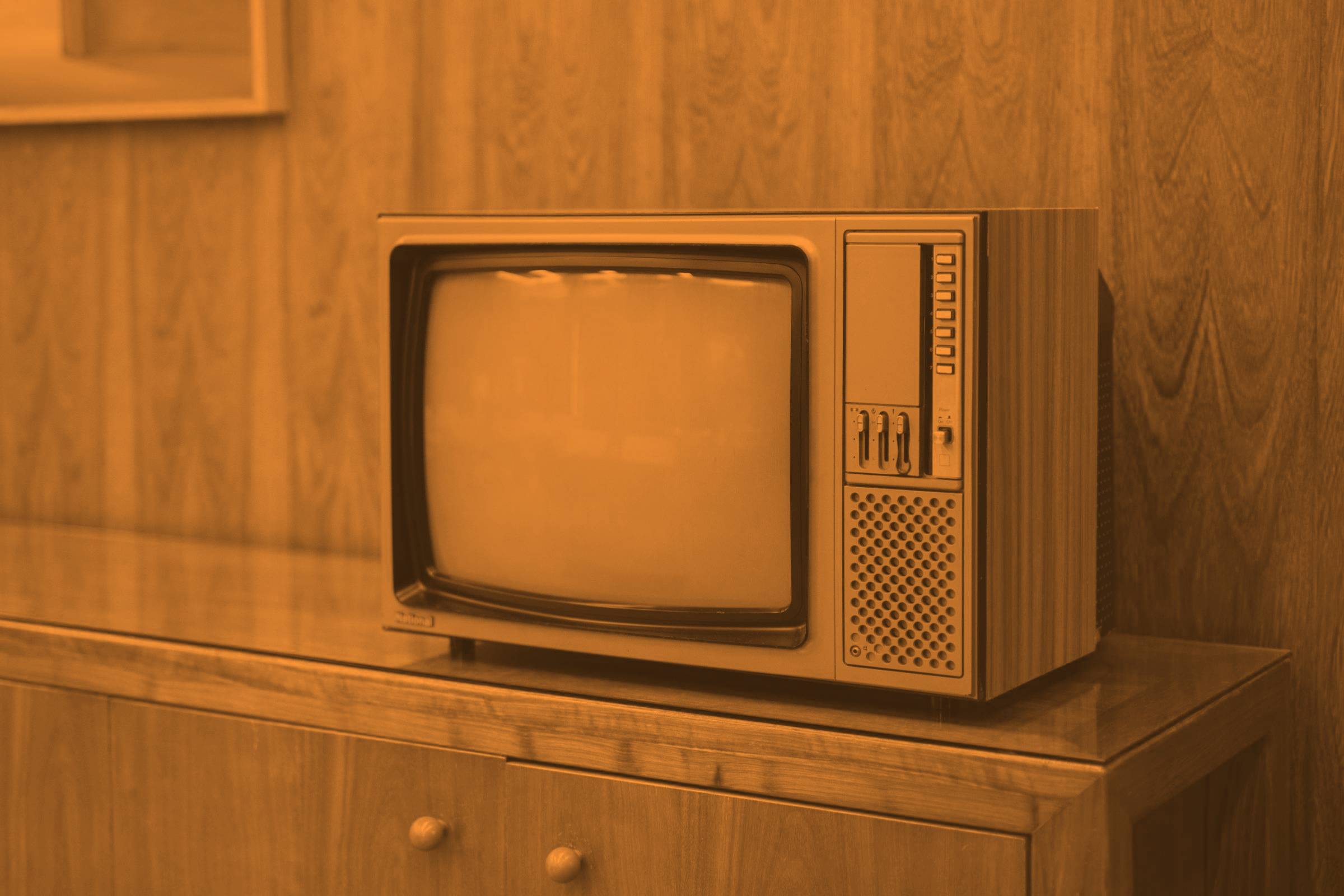
In the next scene, we get to see Herbert in action as he talks to the camera during his regular show where he makes his predictions that always come true.

What strikes me here is how quickly St. Clair makes us feel for young Herbert. He’s a bookish, nice boy, trying to do his best to please everyone. His attitude is one that I couldn’t help but instantly latch onto and root for.

To me, the power of this tale is in St. Clair’s ability to give us what we need, when we need it.

It’s a hard thing to do. We need the rules of the story. And the key rule here is that in order for Herbert to make a prediction, he needs to have knowledge about it first. That’s why he is reading so much. That’s why he’s learning. He needs to have something in his brain first or no predictions will come. The more he knows, the more he can predict, the more he can help people.

My father says that if I work hard and get good grades in school, I can have a small telescope at the end of the term.

Some of this info is a bit on the nose, but some of it is very subtle. In the first programme we get to ‘watch’, Herbert talks about getting a telescope and learning about ‘variable stars’. I didn’t understand this reference when first reading it, but we’re talking about stars changing in their brightness. So, we know he is interested in this activity. He’s learning about stars.

That’s the reason why I read so many books. The more things I know about, the more things I can predict.

After a predicted earthquake becomes reality, Read gets the go ahead from his bosses to press on with giving Herbert a full examination to find out how this boy can do what he does. Herbert’s father seems very pleased about this.

It was not until Thursday that he realised that he was hesitating not because he was afraid of wasting the university’s money on a fake, but because he was all too sure that Herbert Pinner was genuine. He didn’t at bottom want to start this study. He was afraid.

We get the above from the internal world of Read right before he is due to watch another show and start his official work. I like this placement. No one else in the story is scared (although I do get the sense that Herbert is also scared though it isn’t stated). This adds a nice piece of doubt in our minds as readers. This man, this scientist (connotations: cold, clinical) is the one to be scared?

Then, we get our surprise. Herbert refuses to go on air. He’s frightened stiff by something. What has he seen? we ask.

“But Herbie, you can have anything you want, anything, if you only will! That telescope—I’ll buy it for you tomorrow. I’ll buy it tonight!”

“I don’t want a telescope,” young Pinner said wanly. “I don’t want to look through it.”

After his father gets a bit stroppy, and no one can get Herbert to do the show, the father asks Read to step in, ‘see what you can do with him.’ And Read talks to Herbert on a more adult level. This warmed me up to Read’s character.

The crisis was over, the worst would not occur.

This statement is a nice wee wink from the writer. So, Herbert decides to do the show, tells everyone that mankind’s struggles are over. No more war. No more hunger. We’ll reach the stars. It’ll be a time of great celebration.

And, of course, they all believe him. The world goes into somewhat of a joyous frenzy with the news, for why shouldn’t they believe Herbert?

But, it’s not to be. And Read senses this in the hotel room they go to to escape the chaos of the streets. This, after Herbert’s dad leaves to join the party.

“I want to tell you about tomorrow.”

Then, we get the bombshell that Herbert has seen the end of the sun. He’s seen a Nova happening in the future, a Nova that he never would’ve seen if he hadn’t started learning about variable stars, etc.

And, that’s how the tale ends. Herbert tells Read that the world is going to end.

The weight of the world

When going through this tale, I’m struck by how Herbert is almost ‘the second coming’. He’s put up on a pedestal and held in such awe. Everyone hangs on his every word. Quite rightly, too, since he’s proved that what he says always comes true.

But this gift comes at a cost to young Pinner. What childhood is he allowed? And the great weight that’s placed on his shoulders is too much for a kid, surely? (more on that below…).

If Herbert didn’t have this gift, would his father notice him for a boy and not a gift to be exploited? What breaks my heart more than anything in this story is when Read, Herbert and the father get to the hotel, away from all the noise, and Dad leaves his son.

Fair enough, his father doesn’t know it’s the end of the world, but it says everything about how the dad would rather relish the gifts than spend time with the person, his son, giving the gifts. He’s a lonely boy.

Does the dad come back? Does he go on a bender and Herbert never sees him again?

And why tell Read that the world is going to end at all? Why not allow Read to fall for the lie, too? Is it because he feels connected to Read in a way he doesn’t with his own father? Is it simply because Herbert needs to tell someone, anyone, to share the burden?

The thing that made this tale so impactful

For me, the impact of this tale is that it is a boy who’s doing all this. He’s been given a gift that he ends up not wanting. But, he does a very grown up thing. When he finds out the world is going to end, he doesn’t scream this to the world, as he knows that it’ll make no difference. Instead, he gives the whole world a gift. He makes sure everyone enjoys themselves and has a great big party before the end comes.

This play of youth versus wisdom is what turns this tale from ‘good idea’ to ‘great execution’. It leaves its mark.

Would we do the same in his situation? Would we want to know when the world ends in the first place? Is this the question the author had in their mind when writing it?
Dissecting ‘The Pale Man’ by Julius Long

This post was originally published to Short Story Club over on Substack. You can also read or listen to the tale

First published in 1934 in Weird Tales, this is a creeping story about the inevitability of death and also, for me, the importance of self-worth. Coming in at only 1,540 words, it uses a very effective method that really sunk into my bones when I first read it.

How did this tale achieve this? And what themes did I take away? That’s the kind of conversations we like having here.

‘I should like very much to make his acquaintance’

First off, a confession. For me, one of the creepiest places to be is a hotel. Maybe the Overlook ruined me when I was a kid, but I’ve always been creeped out by hotels, so any tale featuring a hotel will instantly have me on edge. But there’s a reason it’s a common setting for a horror tale, right?

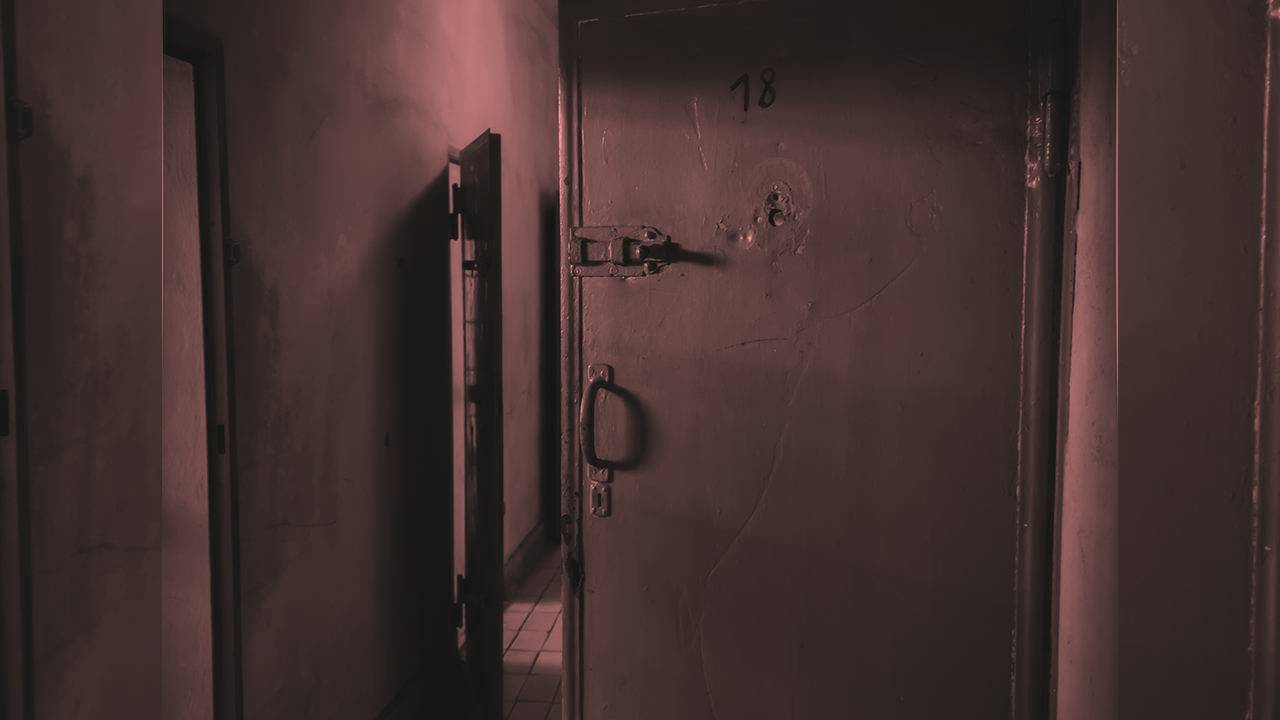
We start with our narrator wanting to meet the man in room 212. This man is somewhat of a mystery to him, and we’re instantly given the picture that our main character is very lonely indeed.

I should like very much to make his acquaintance. It is lonesome in this dreary place.

We get this line in the first paragraph. It’s almost a ‘careful what you wish for’ story. It places the narrator’s want very clearly in our mind, and we spend the rest of the tale seeing how he goes about meeting this man. Will he accomplish this? Why is it such a big deal to him? It’s something he clutches onto because it seems he has nothing else going on.

We also get two other key pieces of info in the opening gambit. There’s only one other guest, a woman, on this floor of this dingy hotel. We also learn that our narrator has been given something of a ‘rest cure’ order (see: The Yellow Wallpaper). He is here on doctor’s orders, being given some period of suggested leave by his boss at the university. He’s not in a good way.

Already, there’s a certain mood to the tale. A greyness, almost. Why not just march up to room 212 and chap? Why is he so lonesome? The mood it sets us in tells us everything we need to know about the character and how little he thinks of himself.

The next paragraph is spent on the Pale Man himself. Why is he so pale, our narrator wonders, when the man steps like an athlete, his back straight and sure. The Pale Man is confident, tall and straight. When we get his description that the man is enjoying the best of health, I felt a pang of jealousy from our narrator.

The third paragraph gives us some hints that something is ‘up’. It’s as if the Pale Man has magically appeared from nowhere, not being helped by the bell-hop or anything. It’s a nice touch.

These three paragraphs set us on our way perfectly. We know what the tale is about, what our narrator wants, where we are, and that something ails him. And we’re also placed in this grey mood.

We go into some excellent descriptions of the hotel’s musty, unpleasant odor, the feeble electric lights, the decrepit building just outside the hotel. He beats down on himself for not pushing for what he wanted in life thirty years ago as he meekly makes his way about his days.

If only it were not so lonely! I must devise a way of meeting the pale man in No. 212. Perhaps the room clerk can arrange matters.

And then, we get to the strangeness of the tale. Our Pale Man in room 212 has moved a door closer to room 211. After our narrator passes him in the corridor, he notices a malign satisfaction in his somber, black eyes. The Pale Man knows something. Is he playing a trick? Is he there at all?

The following sequence tells us that the man is now in room 210. And now, as readers, we are firmly placed in countdown mode. The Pale Man is creeping closer, but our main character doesn’t realise this. It places us in dramatic irony territory where we know something is up, and seem to know more than the character. This, for me, is the power of this tale.

‘I see we are closer neighbors now,’ I might casually say.

I want him to run, get out of there, do something! And the rest of the tale is spent on the Pale Man getting closer. He even visits the lady in room 208 and then she dies. We see that the Pale Man had something to do with it, but our narrator doesn’t come to that conclusion.

I wonder if my condition is more serious than I had suspected. Until now I have been inclined to discount the fears of those who have pulled a long face about me.

Then we get something of a time skip. He wakes up on his floor after having collapsed. Although he has downplayed the reason for his stay, is his condition more serious than he’s letting on? Or is his proximity to the Pale Man bringing out the worst in him and whatever condition he has?

It’s not made clear, but we feel that there’s something seriously ‘up’ with our man. And because of this fainting spell, the Pale Man has moved even closer, skipping three rooms to room 203.

A doctor visits, tells him to stay in his room, and then we get the clerk’s visit and the bombshell that he knows nothing of any Pale Man. He is the only occupant of the whole floor, what the hell is he talking about? He storms out thinking our narrator is a fool.

The pale man sat in a rocking-chair idly smoking a cigarette. He looked up into my eyes and smiled that peculiar, ambiguous smile that has so deeply puzzled me.

I love this image. He is waiting, but is also in no rush, almost sad about his role in all of this. Squarely in our minds at this point is that the Pale Man is the doom of our narrator, come to take him away.

I know the identity of the pale man, and I know the meaning of his smile.

And then we get to the end of the tale. Instead of fleeing, our man stays in his room and waits for the Pale Man’s arrival, with knowledge of the fact that the Pale Man is here to collect him. And we end the tale on the door opening.

After all, I brought the pale man with me.

The helpless language

I am not the sort to run after anybody.

I mean ‘helpless’ as a compliment. The whole tale drips with a grey helplessness all the way through so that we can’t help but feel what our character feels. It’s inevitable. Death is coming. He might have even brought the Pale Man with him. There is no hope here, and hardly any fight.

If only it were not so lonely!

All of this, typically, can get a bit overbearing if done incorrectly. Another big factor in this is word count. As readers, we can only take so much of this depressing, hopeless way of being. This tale clocks in at 1,540 words. A very short space in which the feeling is effective enough not to be overbearing (imo). Eventually, we would tire of this, but there’s not enough space for that.

When he comes, I shall at least be able to return his smile of grim recognition.

Another thing about the language is that there is a kind of acceptance about it at the end. It almost sighs with it, languid and defeated.

A giving up or an acceptance?

What made me connect to this tale so much was my desire for our main character to do something! I don’t know about you, but all through this tale, particularly on reread, I just wanted him to pick himself up and try for once in his meek life.

And doesn’t it say a lot that we don’t get the narrator’s name at any point in the tale? Does he think so little of himself?

Perhaps his death really is inevitable (we don’t find out what he’s got, medically speaking), but if he believed in himself, fought for himself, would he have a better position at the university? A better life? A family? Would he give himself what he needs to care for himself, instead of allowing himself to get to this state in the first place? Does he care at all?

There were opportunities to save himself through the tale even when he was feeling ill, if only he had more self-esteem. The woman dying, the opportunity to be taken to a hospital room, but no – he stays where he is and is rather adamant about it.

Part of the glory of the tale is that we feel all the countdown tension from the Pale Man’s room changing, creeping ever and ever closer. We want our narrator to flee, but he doesn’t think he’s good enough. And once he finally clocks what’s going on, we see him accept it.

You are worth it

What I take away from this tale is that you are worth standing up for. We are all worth it, but we have to keep ourselves in mind. No one is coming to save us. It’s up to us to have our best interests (and health) at heart. Stick up for what you believe in, fight for the life you want. Check out that niggle with your doctor. Reach for the job you want. You get the point.

Taking a closer look, rereading a story, can often bring out these messages. And these messages are the reason that certain stories stick with us. A cool story is nice and all, but a cool story that leaves you contemplating your own life is worth its weight in gold.

This is the power of stories when we take a close look. It can inspire you into action.